


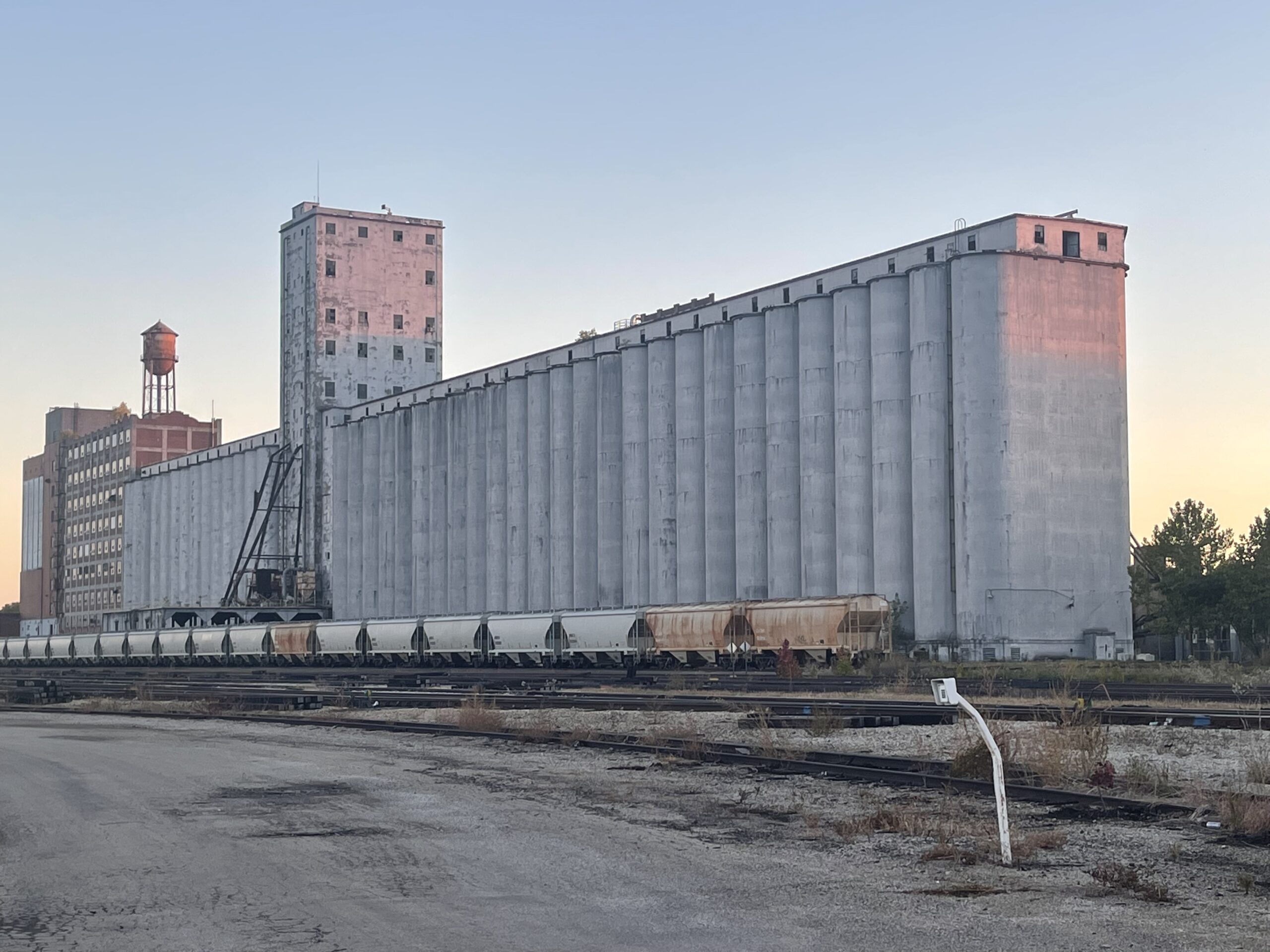

Findings of a phase-two environmental study of the old Pillsbury Plant were announced during a public meeting Wednesday night, where Joel Zirkle of the firm Fehr-Graham said there was less contamination than expected and none in amounts that would limit future development of the site.
Of note, arsenic in amounts higher than would occur naturally was detected in about half of the spots tested. “There were thirty-four locations that showed arsenic,” Zirkle said. “We drilled seventy borings, so almost half, and it was spread fairly consistently across the site, so it’s not like it was all concentrated in one spot.”
Arsenic was a common constituent of pesticides, which would have been in use when the plant was operational.
There are multiple options for abatement. “It’s really pretty straight forward,” Zirkle said. “Here there would either be a barrier over it, we could land-fill it, or we may be able to migrate it into, say, a berm and we create a sole management zone, we cover it over with clean material and some fabric to make it safe and we leave it on site.”
Wednesday night’s presentation at Wanless Elementary was hosted by the non-profit Moving Pillsbury Forward.