


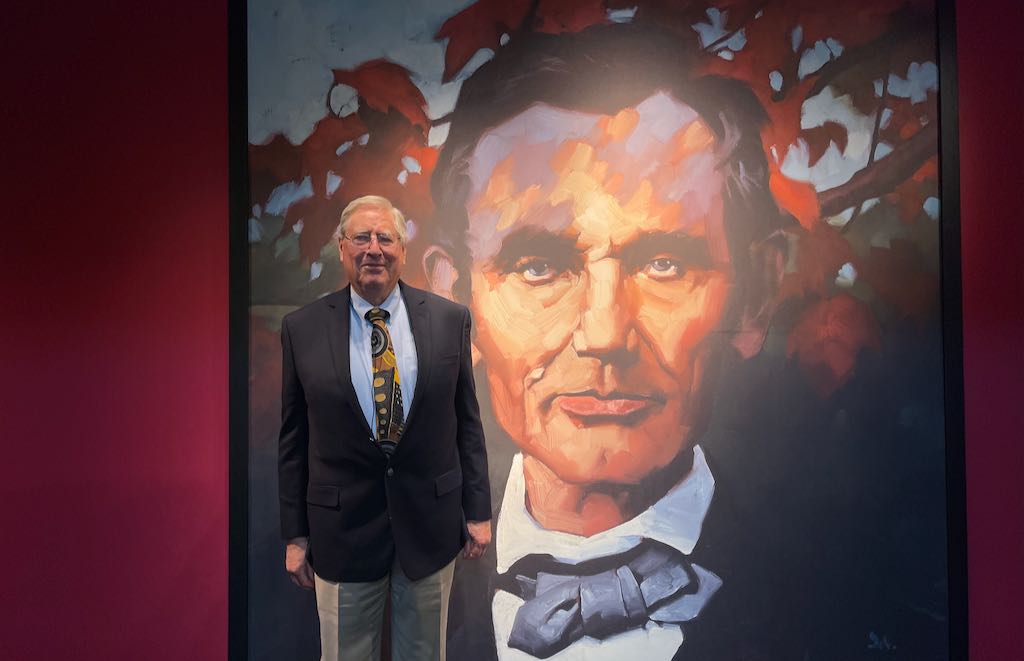

For 80 years, Holocaust survivors have shared stories of the horrors they faced. Historian Christopher Browning has made it his mission to understand the many ways those stories have been used and how they are affected by the limitations of human memory.
“It’s not that they’re lying,” Browning said, in speaking generally about how people recall the past. “It’s simply that they prioritize certain parts of their past and are eliding other parts to meet the expectations of the era they’re now living in. On a large scale it’s what’s known as collective memory. In the case of survivors of the Holocaust, then of course we add trauma. And pain.”
Browning said that even decades after the Holocaust, when he was doing much of his initial research in the 1990s, he discovered survivors still would find some things too difficult to talk about.
He’s concerned that now, with the invasion of Ukraine, we may have reached a “demographic tipping point,” where the lessons learned from one country invading its neighbor, as happened in World War II, have become lost.
Browning is professor emeritus of history at the University of North Carolina. His talk Thursday night came against the backdrop of an ongoing exhibit at the Abraham Lincoln Library and Museum, “Stories of Survival: Object. Image. Memory,” which runs through January 22, 2023.